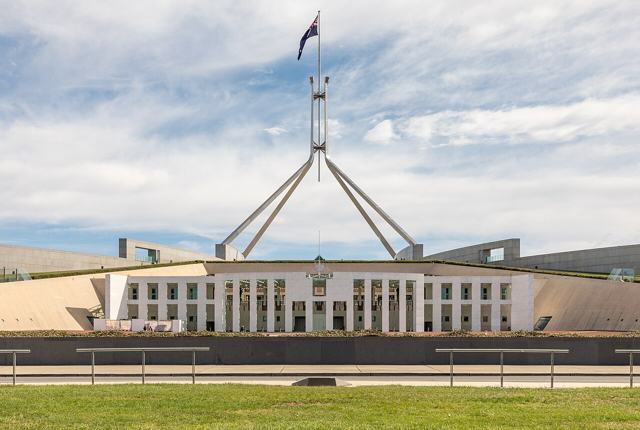
At your ceremony you pledge to uphold and obey the laws of Australia. Australia’s system of government is a parliamentary democracy. This part explains how it works, how laws are made and enforced, and how you have a say in running the country.
How you have your say
Voting
- Citizens aged 18 or over must enrol to vote in federal, state and territory elections and in referendums on changes to the Constitution.
- You have a say in how Australia is governed by voting for a person to represent you in parliament.
- If you are not correctly enrolled, you cannot vote.
- Voting is compulsory. If you don’t vote and have no good reason, you may have to pay a fine. Compulsory voting makes sure the people have a say in who governs and represents them.
Australian Electoral Commission (AEC)
- A Commonwealth agency that conducts federal elections and referendums.
- Maintains the Commonwealth electoral roll, the list of people registered to vote.
- Independent of government: political parties and people in government cannot influence its decisions.
Secret ballot
- You vote privately, so you are free and safe to vote for any candidate.
- No one is allowed to know whom you voted for, unless you choose to tell them.
Raising matters with your representatives
You can contact your elected representative to raise concerns about government policy. That way every Australian can have a say in the laws and policies of a government. If you tell your representative a law needs to change, they should consider your suggestion.
Federation
From six colonies to one nation
Before 1901: six British colonies
1 January 1901
of Australia
After British settlement and before 1901, Australia was six separate, self-governing British colonies. Each had its own constitution and its own laws on defence, immigration, postage, trade and transport. This caused problems:
- Trade and transport between colonies was expensive and slow
- Enforcing the law across borders was difficult
- The separate colonies had weak defence
A national identity was also forming: sporting teams were representing Australia internationally, and an Australian culture was growing in songs, poems, stories and art. Uniting the nation was difficult, but on 1 January 1901 the colonies became a federation of states called the Commonwealth of Australia.
The Australian Constitution
The Commonwealth of Australia Constitution Act 1900 is the legal document that sets out the basic rules for the government of Australia. It is the supreme law, and the government must abide by it.
1900
Passed in Britain
The Constitution was passed as part of a British Act of Parliament.
1 January 1901
It comes into effect
The colonies became one independent nation, the Commonwealth of Australia. The Constitution set up the Parliament (the House of Representatives and the Senate) and the High Court of Australia, which has the ultimate power to apply and interpret the laws of Australia.
Changing the Constitution: referendums
Only the Australian people can change the Constitution, by voting in a referendum. For example, in the 1967 Referendum more than 90 per cent of Australians voted ‘Yes’ to allow Aboriginal peoples to be counted in the Census.
A referendum needs a ‘double majority’: a majority of voters across the nation and a majority of voters in a majority of states (at least 4 of the 6) must vote Yes.
Try it: would this referendum pass?
Tap states to switch Yes/No, and drag the national result.
How the power of government is controlled
The Constitution splits government power into three parts to stop one person, or one group, from holding all the power.
Legislative power: make and change laws
Held by Parliament, which is made up of representatives elected by the people.
Legislative power: make and change laws
Held by Parliament, which is made up of representatives elected by the people.
Executive power: put laws into practice
Held by the Prime Minister, government ministers and the Governor-General (the Cabinet is part of it). Ministers are responsible for government departments.
Judicial power: interpret and apply the law
Held by judges and the courts, who are independent of parliament and government.
- Legislative power is the power to make and change laws. Parliament has it, and Parliament is made up of representatives elected by the people.
- Executive power is the power to put the laws into practice. The Executive includes the Prime Minister, government ministers and the Governor-General. Ministers are responsible for government departments.
- Judicial power is the power to interpret and apply the law. Judges have it. Courts and judges are independent of parliament and government.
These powers are written into the Australian Constitution.
Legislative = Law-making. Executive = Executing (doing). Judicial = Judges.
Head of State and the Governor-General
Australia’s Head of State is the King of Australia, His Majesty King Charles III.
- The King appoints the Governor-General as his representative in Australia, on advice from the Prime Minister.
- The Governor-General acts independently of all political parties.
- The King has no day-to-day role in government.
- In each state, a Governor represents the King, in a role similar to the Governor-General.
A constitutional monarchy
The King is Head of State but must act according to the Constitution. Because the King doesn’t live in Australia, his powers are delegated to the Governor-General. Australia’s parliamentary democracy combines British and North American traditions in a uniquely Australian way, and the leader of the Australian Government is the Prime Minister.
What the Governor-General does
The Governor-General is not part of the government and must remain neutral. The role includes:
- Signing all Bills passed by Parliament into law (Royal Assent)
- Performing ceremonial duties
- Approving the appointment of the government and its ministers, federal judges and other officials
- Starting the process for a federal election
- Acting as Commander-in-Chief of the Australian Defence Force
The Governor-General also has special ‘reserve powers’ that can only be used in specific circumstances.
Watch out
Head of State = the King. Leader of the government = the Prime Minister. King’s representative = the Governor-General nationally, a Governor in each state.
Who are some of Australia’s leaders?
| Level | Leader | Represents the King |
|---|---|---|
| Australia | Prime Minister | Governor-General |
| State | Premier | Governor |
| Territory | Chief Minister | NT: an Administrator |
| Local council | Mayor or Shire President | — |
- Head of State: the King of Australia
- Governor-General: the King’s representative in Australia
- Governor: the King’s representative in each state
- Prime Minister: leader of the Australian Government
- Premier: leader of a state government
- Chief Minister: leader of a territory government
- Government minister: an MP chosen by a government leader to be responsible for an area of government
- Member of Parliament (MP): an elected representative of the people in the Australian Parliament or a state parliament
- Senator: an elected representative of a state or territory in the Australian Parliament
- Mayor or Shire President: leader of a local government
- Councillor: an elected member of a local council
The Australian Parliament
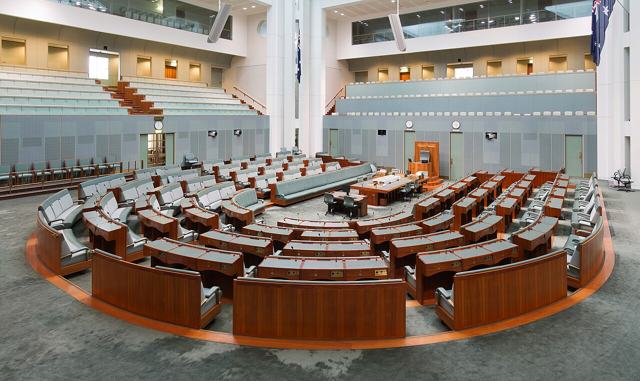
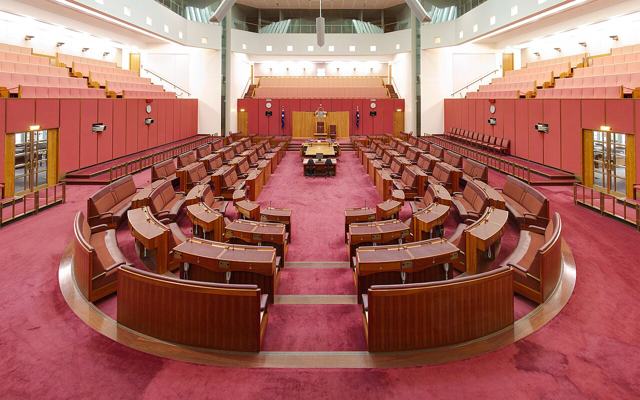
The Australian Government is also called the Federal or Commonwealth Government. It is made up of members of the Australian Parliament, which has two Houses. In a federal election, citizens vote for representatives in each House.
House of Representatives
- Australia is divided into federal electorates. Each Member of Parliament (MP) represents the people in their electorate.
- The number of MPs for each state and territory is based on population. There are over 150 members.
- Considers, debates and votes on proposed new laws or changes to laws, and discusses matters of national importance.
The Senate
- All states are equally represented, regardless of size or population.
- 76 senators: 12 for each state, and 2 each for the ACT and the Northern Territory.
- Also considers, debates and votes on new laws or changes to laws, and discusses matters of national importance.
House of Representatives
Over 150 seats, shared out by population
The Senate
76 seats. Tap a state to highlight its senators.
Watch out
Seats based on population = House of Representatives. The same for every state = Senate. The government is formed in the House of Representatives.
State, territory and local government
- Each of the six states has its own parliament and constitution. State and territory governments are based in their capital cities.
- The leader of a state government is the Premier; of a territory government, the Chief Minister.
- State governments work in a similar way to the Australian Government. In each state a Governor represents the King. In the Northern Territory, an Administrator appointed by the Governor-General has a similar role.
- In state and territory elections, citizens vote for a representative for their area, who becomes a member of that parliament.
States
- Have rights recognised by the Constitution.
- Can pass laws in their own right.
Territories
- Do not have rights recognised by the Constitution.
- Laws made by a self-governing territory can be altered or revoked by the Australian Government at any time.
Local government
The states and the Northern Territory are divided into local government areas, which may be called cities, shires, towns or municipalities. Each has its own local council, which plans and delivers services for the local community. Citizens in each area vote to elect their local councillors.
What do the three levels of government do?
Some responsibilities overlap, but generally each level provides different services.
Australian Government
- taxation
- national economic management
- immigration and citizenship
- employment assistance
- postal services and the communications network
- social security (pensions and family support)
- defence
- trade and commerce
- airports and air safety
- foreign affairs (relations with other countries)
State & territory governments
- hospitals and health services
- schools
- roads and railways
- forestry
- police and ambulance services
- public transport
Local governments
- street signs, traffic controls
- local roads, footpaths, bridges
- drains
- parks, playgrounds, swimming pools, sports grounds
- camping grounds and caravan parks
- food and meat inspection
- noise and animal control
- rubbish collection
- local libraries, halls and community centres
- certain child-care and aged-care issues
- building permits
- social planning
- local environmental issues
Study tip: national things (defence, immigration, foreign affairs) → Australian Government. Big services (hospitals, schools, police) → state. Your street (rubbish, parks, permits) → local council.
Mini-game: who’s responsible?
12 random services. Pick the level of government.
Political parties and forming government
A political party is a group of people who share similar ideas about how the country should be governed. They work together to turn the party’s ideas into laws. The main parties in Australia are:
- The Liberal Party of Australia
- The Australian Labor Party
- The Nationals
- The Australian Greens
Most parliamentarians belong to a party. Those who don’t are called independents. People are free to join a political party if they choose.
How the Australian Government is formed
- ElectionThe party or coalition with the majority in the House of Representatives generally forms government.
- Prime MinisterThe leader of that party becomes the Prime Minister.
- OppositionThe party or coalition with the second most members forms the Opposition, led by the Leader of the Opposition.
- MinistersThe PM recommends MPs or senators as ministers; the Governor-General approves the PM and ministers.
Each minister looks after an area of government called a portfolio, such as employment, Indigenous Affairs or the Treasury. The ministers with the most important portfolios make up the Cabinet, the key decision-making body of government. A coalition is two or more parties joining together, usually to form a government or opposition.
How are laws made?
The Australian Parliament has the power to make or change laws to benefit the nation. Step through it:
- A member of the Australian Parliament proposes a new law or a change to an existing one. This proposal is called a Bill.
- The House of Representatives and the Senate consider, debate and vote on whether they agree with the Bill.
- If the majority of members in each House agree to the Bill, it goes to the Governor-General.
- The Governor-General signs the Bill so it becomes law. This is called Royal Assent.
State and territory parliaments make their own laws in a similar way.
How are laws enforced?
Who does what when someone may have broken the law:
- PoliceInvestigate, arrest, and may give evidence.
- CourtDecides only on the evidence. You’re innocent until found guilty.
- JuryOrdinary citizens decide guilty or not guilty.
- JudgeExplains the law and decides the penalty.

The courts
Courts in Australia are independent. A court decides whether a person has broken the law and decides the penalty, and it can only base its decision on the evidence before it.
Judges and magistrates
The judge or magistrate is the highest authority in a court. They are independent, and no one can tell them what to decide. They are appointed by the government, but the government cannot take their jobs away if it disagrees with their decisions. A magistrate is a judge of a lower court.
Juries
- People are considered innocent until they are found guilty in a court, and every person has the right to be represented by a lawyer.
- In some cases a court uses a jury: a group of ordinary citizens randomly chosen from the general population, who decide whether a person is innocent or guilty.
- The judge explains the law to the jury. In a criminal trial, if the jury finds a person guilty, the judge decides the penalty.
The police
- The police maintain peace and order and protect life and property. They are independent of the government.
- If they believe someone has broken the law, they can arrest them and bring them to court. The police may give evidence, but the court decides whether a person is guilty.
- The states and the Northern Territory have their own police forces for crimes under state and territory laws.
- The Australian Federal Police (AFP) is the national police force. It investigates crimes against federal laws, such as drug trafficking and crimes against national security or the environment, and does general police work in the ACT.
- Police and the community have a good relationship in Australia. You can report crimes and get help from your local police.
Serious crime
It is a serious crime to bribe the police, and a crime to even offer a bribe to a police officer.
Criminal and traffic offences
If you break a law you didn’t know about, you can still be charged. Not knowing the law is no excuse.
Some of the most serious crimes
- murder, assault and sexual assault
- violence against people or property
- armed robbery or theft
- sexual relations with children or young people below the legal age of consent
- dangerous driving of a motor car
- possession of illegal drugs
- fraud
Domestic and family violence
Everyone has the right to positive and safe relationships with their family, friends and loved ones. Violence towards another person is illegal and a very serious crime, including within the home and within marriage. Domestic and family violence includes behaviour or threats that aim to control a partner by causing fear or threatening their safety, such as:
- hitting
- isolating a family member from friends and family
- threatening children or pets
A person who commits these crimes can go to jail, whether they are a man or a woman. No one should accept being treated badly or harmed.
Getting help
If you or someone you know is in danger, contact the police. In an emergency, call 000. More information: 1800respect.org.au and respect.gov.au.
Traffic offences
Road and traffic rules are controlled by state and territory governments. Breaking them can mean a fine or prison.
- You need a local driver’s licence, and the car must be registered
- Everybody in a car must wear a seatbelt
- Babies and young children must be in an approved car seat
- Illegal to drive after taking drugs or above the blood alcohol limit
- Illegal to use a hand-held mobile device while driving
Quick check: Part 3
Five random questions from this part. Click an answer to see if you’re right.
Finished Part 3?Tick it off and your progress is saved on this device.